Bill Cobbs

Acting

Biography

Bill Cobbs was born and raised in Cleveland, Ohio, where his parents were hard-working people, who instilled in him a sense of self-reliance and humility. As an amateur actor in the city's Karamu House Theater, he starred in the Ossie Davis play "Purlie Victorious". Cobbs was an Air Force radar technician for eight years; he also worked in office products at IBM and sold cars in Cleveland. In 1970, at the age of 36, he left for New York to seek work as an actor. There he turned down a job in the NBC sales department in order to have time for auditions. He supported himself by driving a cab, repairing office equipment, selling toys, and performing odd jobs. His first professional acting role was in "Ride a Black Horse" at the Negro Ensemble Company. From there, he appeared in small theater productions, street theater, regional theater and at the Eugene O'Neill Theater. His first television credit was in Vegetable Soup (1975), a New York public television educational series, and he made his feature film debut in The Taking of Pelham One Two Three (1974). In his free time, Cobbs enjoys music, reading, and playing his drums. He lives in New York City and Los Angeles, California and continues acting.
Ratings

Acting
—0 ratings

Filmography

Acting

38 titles

First Kid

Movie

Some say that to be the leader of a country is one of the loneliest jobs in the world. But being the child of a world leader can be doubly so. Constantly surrounded by security officers, restricted in movements and having almost every waking moment carefully monitored makes normalcy an impossibility. No one knows this better than young Luke Davenport, the son of U.S. President Davenport. He vents his loneliness, frustration and feelings of isolation from family and friends by being a brat to his private Secret Service agent. When the agent snaps from the strain in front of the First Lady, a new agent is assigned to Luke. He turns out to be the enormous Sam Simms, a bit of a rogue who managed to rise through the ranks by sheer determination rather than strict adherence to Secret-Service protocol. At first, Luke tries all his old tricks upon Sam. But instead of getting angry, Sam seems to actually understand.

Overall—
Story—
Acting—
Cinematography—
Concept—
Entertaining—
Uniqueness—
Family Friendly—

I'll Fly Away

TV

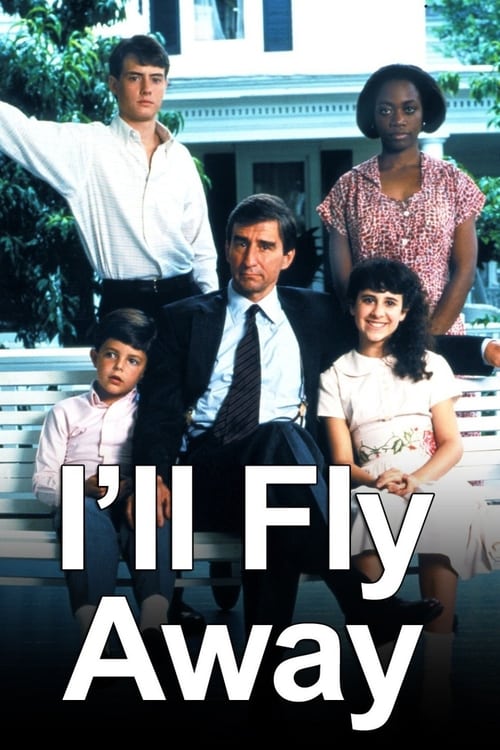
I'll Fly Away is an American drama television series set during the late 1950s and early 1960s, in an unspecified Southern U.S. state. It aired on NBC from 1991 to 1993 and starred Regina Taylor as Lilly Harper, a black housekeeper for the family of district attorney Forrest Bedford, whose name is an ironic reference to Nathan Bedford Forrest, the founder of the Ku Klux Klan. As the show progressed, Lilly became increasingly involved in the Civil Rights Movement, with events eventually drawing in Forrest as well. I'll Fly Away won two 1992 Emmy Awards, and 23 nominations in total. It won three Humanitas Prizes, two Golden Globe Awards, two NAACP Image Awards for Outstanding Drama Series, and a Peabody Award. However, the series was never a ratings blockbuster, and it was canceled by NBC in 1993, despite widespread protests by critics and viewer organizations. After the program's cancellation, a two-hour movie, I'll Fly Away: Then and Now, was produced, in order to resolve dangling storylines from Season 2, and provide the series with a true finale. The movie aired on October 11, 1993 on PBS. Its major storyline closely paralleled the true story of the 1955 murder of Emmett Till in Money, Mississippi. Thereafter, PBS began airing repeats of the original episodes, ceasing after one complete showing of the entire series.

Overall—
Story—
Acting—
Cinematography—
Concept—
Entertaining—
Uniqueness—
Family Friendly—