James Horner

Sound

Biography

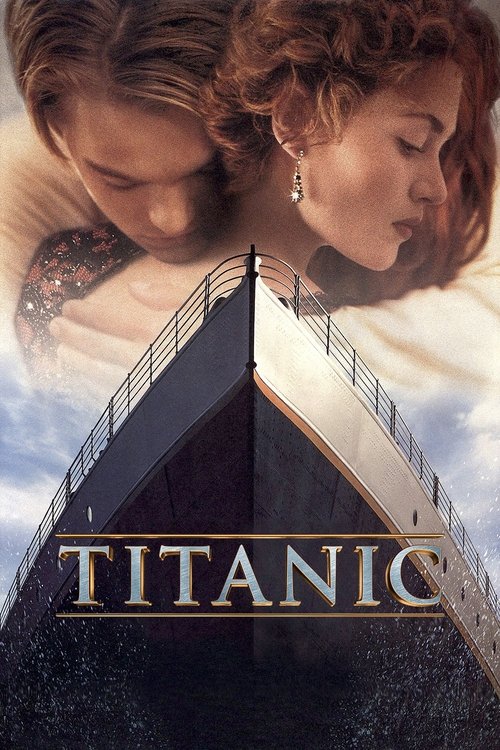
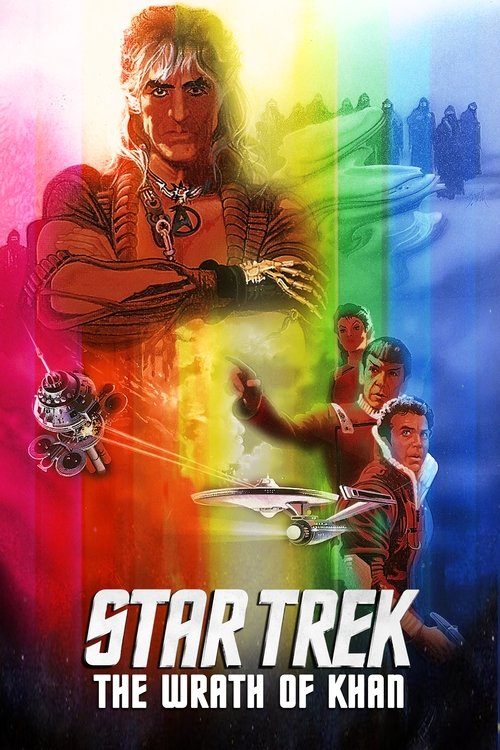
James Roy Horner (August 14, 1953 – June 22, 2015) was an American composer, conductor and orchestrator of film scores. He was known for the integration of choral and electronic elements in many of his film scores, and for his frequent use of motifs associated with Celtic music. Horner was an accomplished concert hall composer before he moved into writing film scores. His first major film score was for the 1979 film The Lady in Red, but did not establish himself as a mainstream composer until he worked on the 1982 film Star Trek II: The Wrath of Khan. Horner's score for Titanic is the best selling orchestral film soundtrack of all time while Titanic and Avatar, both directed by James Cameron, are the two highest-grossing films of all time. Horner collaborated on multiple projects with directors including Don Bluth, James Cameron, Walter Hill and Ron Howard; producers including David Kirschner, Jon Landau, Brian Grazer and Steven Spielberg; and songwriters including Will Jennings, Barry Mann andCynthia Weil. Horner composed music for over 100 films; he won two Academy Awards, two Golden Globe Awards, three Satellite Awards, and three Saturn Awards, and was nominated for three British Academy Film Awards. Horner died when his single-engine Tucano aircraft crashed in the Los Padres National Forest. He was 61.

Ratings

Music Composing
821 rating

Filmography

Music Composing

96 titles

Black Gold

Movie

On the Arabian Peninsula in the 1930s, two warring leaders come face to face. The victorious Nesib, Emir of Hobeika, lays down his peace terms to rival Amar, Sultan of Salmaah. The two men agree that neither can lay claim to the area of no man’s land between them called The Yellow Belt. In return, Nesib adopts Amar’s two boys Saleeh and Auda as a guarantee against invasion. Twelve years later, Saleeh and Auda have grown into young men. Saleeh, the warrior, itches to escape his gilded cage and return to his father’s land. Auda cares only for books and the pursuit of knowledge. One day, their adopted father Nesib is visited by an American from Texas. He tells the Emir that his land is blessed with oil and promises him riches beyond his wildest imagination. Nesib imagines a realm of infinite possibility, a kingdom with roads, schools and hospitals all paid for by the black gold beneath the barren sand. There is only one problem. The precious oil is located in the Yellow Belt.

Overall—
Story—
Acting—
Cinematography—
Concept—
Entertaining—
Uniqueness—
Family Friendly—
Miscellaneous Crew

105 titles

Black Gold

Movie

On the Arabian Peninsula in the 1930s, two warring leaders come face to face. The victorious Nesib, Emir of Hobeika, lays down his peace terms to rival Amar, Sultan of Salmaah. The two men agree that neither can lay claim to the area of no man’s land between them called The Yellow Belt. In return, Nesib adopts Amar’s two boys Saleeh and Auda as a guarantee against invasion. Twelve years later, Saleeh and Auda have grown into young men. Saleeh, the warrior, itches to escape his gilded cage and return to his father’s land. Auda cares only for books and the pursuit of knowledge. One day, their adopted father Nesib is visited by an American from Texas. He tells the Emir that his land is blessed with oil and promises him riches beyond his wildest imagination. Nesib imagines a realm of infinite possibility, a kingdom with roads, schools and hospitals all paid for by the black gold beneath the barren sand. There is only one problem. The precious oil is located in the Yellow Belt.

Overall—
Story—

Acting—

Cinematography—
Concept—
Entertaining—
Uniqueness—
Family Friendly—